
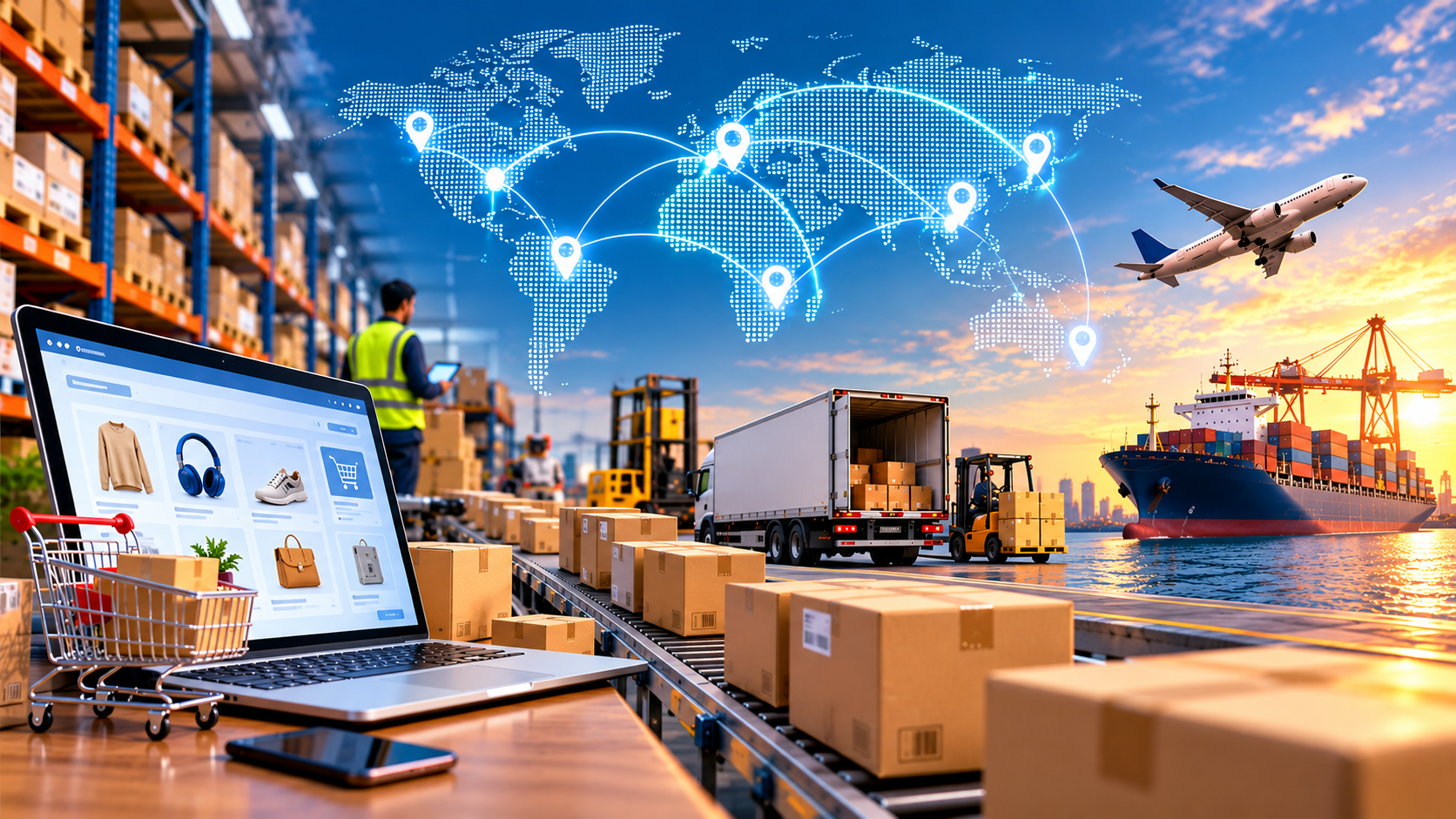
Online shopping has changed how businesses operate, but very little of that change is visible to the customer. Behind every order placed on a website is a complex chain of decisions — where the product is stored, how quickly it can be picked and packed, which carrier delivers it, and what happens if the customer wants to return it. This is the world of supply chain management for e-commerce, and it has become one of the most important factors separating successful online retailers from struggling ones.
What Is Supply Chain Management in E-Commerce?
E-commerce supply chain management refers to the coordination of every step involved in getting a product from a supplier to a customer’s doorstep. Unlike traditional retail, where goods move to a physical store and wait for a customer to arrive, e-commerce reverses the process — the product must travel to the customer, often within days or even hours.
This includes sourcing raw materials or finished goods, managing warehouse stock, processing orders accurately, coordinating shipping, and handling returns smoothly. Every link in this chain affects the final experience a customer has with a brand.
Why an Efficient Supply Chain Matters for Online Businesses
A well-run supply chain isn’t just an operational detail — it directly affects profitability and brand reputation. When the process runs smoothly, customers get their orders on time, businesses spend less on emergency fixes, and inventory doesn’t sit unused or run out unexpectedly.
On the other hand, a weak supply chain leads to delayed shipments, stockouts, overstocking, and frustrated customers who may never return. In a market where consumers can compare delivery speed and reliability across multiple sellers in seconds, supply chain performance has become a competitive advantage rather than a background function.
Core Components of an E-Commerce Supply Chain
Inventory Management
Inventory management is the foundation of e-commerce operations. Businesses need to know exactly what stock they have, where it’s located, and how fast it’s moving. Poor inventory tracking leads to two costly problems: overstocking, which ties up cash and storage space, and stockouts, which result in lost sales and disappointed customers.
Modern inventory systems use real-time data to update stock levels the moment an item is sold, reserved, or returned, giving businesses an accurate picture across multiple sales channels.
Warehousing
Warehouse management involves organizing storage space so products can be located, picked, and packed quickly. Efficient layout planning, barcode or RFID scanning, and clear zoning for fast-moving items all reduce the time it takes to prepare an order for shipment.
Many growing e-commerce brands also use multiple warehouses strategically placed near major customer regions, reducing shipping distance and delivery time.
Order Processing
Order processing covers everything from the moment a customer clicks “buy” to when the package leaves the warehouse. This includes order verification, payment confirmation, picking, packing, and labeling. Errors at this stage — wrong items, damaged packaging, or delayed processing — directly damage customer trust.
Logistics and Transportation
Logistics involves moving goods from warehouses to distribution centers and eventually to the customer. This includes selecting carriers, planning shipping routes, and managing freight costs. Businesses often work with multiple logistics partners to balance cost, speed, and reliability depending on order size and destination.
Last-Mile Delivery
Last-mile delivery — the final leg of the journey from a local distribution point to the customer’s address — is often the most expensive and complex part of the supply chain. It’s also the most visible to customers, since delivery speed and accuracy shape their overall impression of a brand.
Businesses are increasingly investing in local delivery partnerships, regional fulfillment centers, and route optimization tools to make this stage faster and more cost-effective.
Returns Management
Returns are a routine part of online shopping, and how a business handles them matters as much as how it handles outbound orders. A simple, transparent returns process builds customer confidence, while a confusing or slow one discourages repeat purchases. Efficient returns management also allows businesses to quickly resell or restock returned items instead of letting them sit idle.
Supplier Management
Reliable suppliers are essential to keeping the entire chain functioning. This involves maintaining strong communication, setting clear quality standards, and building relationships with backup suppliers to avoid disruption if a primary source faces delays.
How Technology Is Transforming E-Commerce Supply Chains
Supply chain technology has evolved rapidly, helping businesses of all sizes operate with greater precision.
- Artificial Intelligence (AI): AI helps forecast demand more accurately by analyzing historical sales patterns, seasonal trends, and market signals, allowing businesses to stock the right products at the right time.
- Automation: Automated systems handle repetitive tasks such as order routing, inventory updates, and warehouse sorting, reducing manual errors and speeding up fulfillment.
- Data Analytics: Analytics tools give businesses visibility into which products are moving fastest, where delays are occurring, and how delivery performance compares across regions.
- Real-Time Tracking: GPS and IoT-based tracking allow businesses and customers to monitor shipments in real time, improving transparency and reducing “where is my order” support requests.
- Cloud Technology: Cloud-based supply chain platforms connect warehouses, suppliers, and sales channels on a single system, making it easier to manage operations across multiple locations without relying on disconnected spreadsheets or manual updates.
Together, these technologies allow businesses to move from reactive problem-solving to proactive planning.
Key Benefits of a Strong E-Commerce Supply Chain
- Faster delivery through optimized warehousing and logistics planning
- Lower operational costs by reducing waste, excess inventory, and inefficient shipping routes
- Better inventory accuracy through real-time tracking and automated stock updates
- Improved customer satisfaction driven by reliable, on-time order fulfillment
- Greater scalability, allowing businesses to handle demand spikes such as seasonal sales without operational breakdowns
Common Challenges in E-Commerce Supply Chains
Even with modern tools, e-commerce businesses face persistent challenges:
- Supply disruptions caused by supplier delays, transportation issues, or unexpected demand shifts
- Rising delivery costs, particularly for last-mile logistics and expedited shipping options
- Inventory imbalances, including overstocking slow-moving items or running out of bestsellers
- High return volumes, which add cost and complexity to reverse logistics
- Growing customer expectations for faster shipping, real-time updates, and hassle-free returns
Businesses that address these challenges early — through better forecasting, diversified suppliers, and flexible fulfillment networks — are better positioned to maintain consistent service quality.
Future Trends in E-Commerce Supply Chain Management
Looking ahead, several trends are shaping how online businesses manage their supply chains:
- Greater use of predictive analytics to anticipate demand before it happens rather than reacting to it
- Expansion of micro-fulfillment centers located closer to urban customers to shorten delivery times
- Increased adoption of automation and robotics in warehouses to speed up picking and packing
- Wider use of sustainable packaging and delivery practices as customers and regulators pay closer attention to environmental impact
- Deeper integration between inventory, sales, and logistics systems through cloud platforms, giving businesses a single, real-time view of operations
As competition in online retail continues to grow, supply chains that are flexible, data-driven, and customer-focused will be the ones that stand out.
Conclusion
Supply chain management for e-commerce is no longer a background operation — it’s a core part of the customer experience and business strategy. From inventory accuracy and warehousing to last-mile delivery and returns, every stage influences how customers perceive a brand. Businesses that invest in the right technology, build strong supplier relationships, and continuously refine their logistics processes will be better equipped to deliver faster, more reliable service while keeping costs under control. As e-commerce continues to expand, a well-managed supply chain will remain one of the strongest foundations for sustainable growth.
FAQs
1. What is supply chain management in e-commerce?
It’s the process of coordinating sourcing, inventory, warehousing, order processing, shipping, and returns to get products from suppliers to online customers efficiently.
2. Why is supply chain management important for online businesses?
It directly affects delivery speed, costs, and customer satisfaction — key factors that influence repeat purchases and brand trust.
3. How does technology improve e-commerce supply chains?
AI, automation, real-time tracking, and cloud platforms help businesses forecast demand, reduce errors, and speed up fulfillment.
4. What are common challenges in e-commerce supply chains?
Supply disruptions, rising delivery costs, inventory imbalances, high return rates, and increasing customer expectations for fast shipping.
5. What is last-mile delivery, and why does it matter?
It’s the final delivery step from a distribution point to the customer’s address — often the costliest and most visible part of the shipping process.
Leave a Reply