
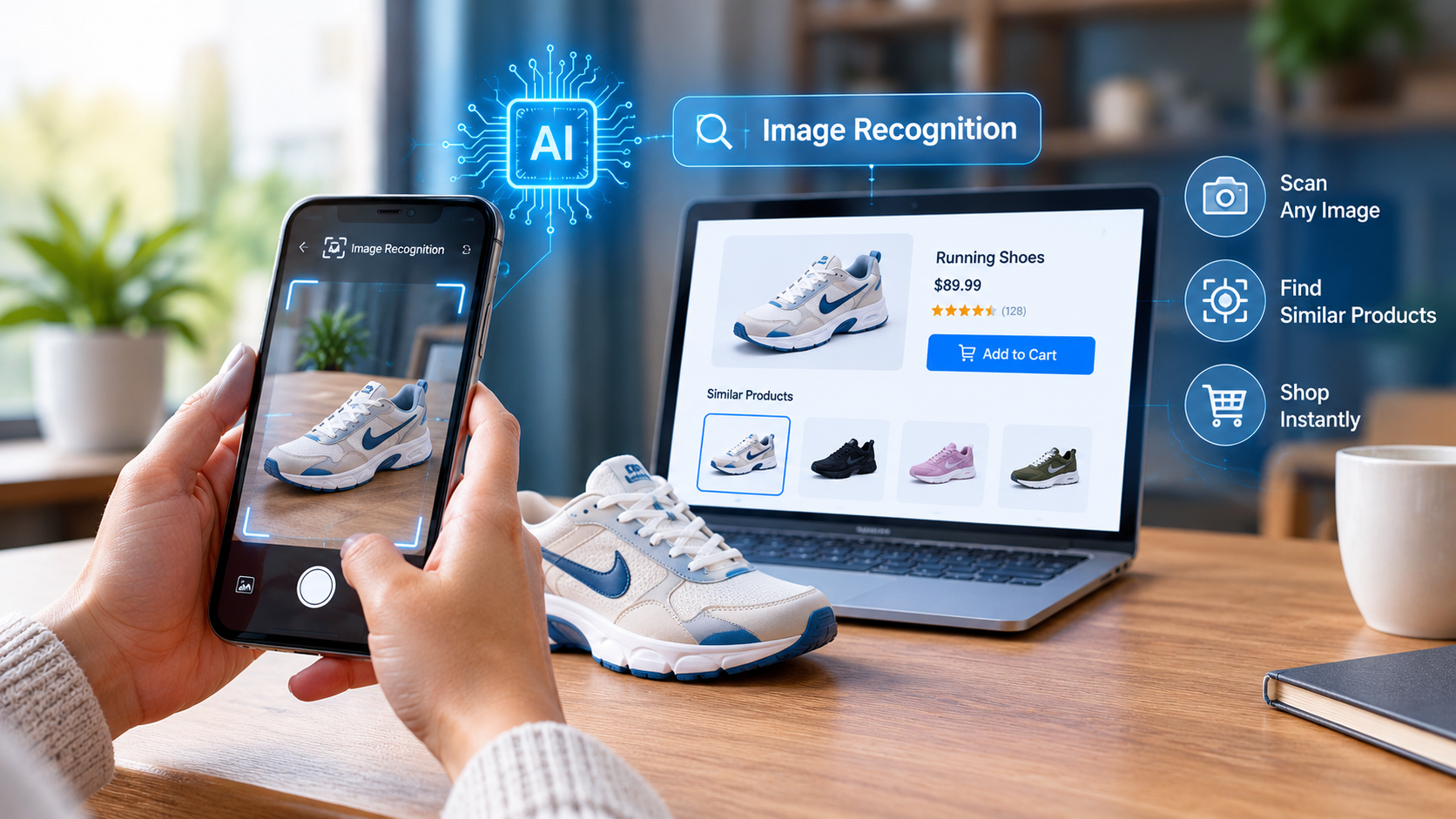
Online shopping has always relied on words: type a query, scroll through results, hope the description matches what’s in your head. That’s changing. Image recognition technology in e-commerce is giving shoppers a faster, more intuitive way to find products — by simply showing a picture instead of typing a description. From visual search bars to AI-powered styling tools, this shift is redefining how people discover, compare, and buy products online.
What Is Image Recognition Technology in E-Commerce?
Image recognition uses computer vision and machine learning to analyze the contents of a photo — shapes, colors, patterns, textures — and match them against a database of products. Instead of relying on keywords or tags, the system “looks” at an image the same way a human eye would, then identifies what it’s seeing.
In retail, this technology powers several connected capabilities:
- Visual search – uploading or snapping a photo to find similar or identical products
- Product recognition – automatically identifying items within an image, even in cluttered scenes
- Image-based recommendations – suggesting related products based on visual similarity, not just past purchase history
- Virtual try-on and shopping experiences – letting customers preview how a product might look or fit before buying
Together, these tools are turning static product catalogs into interactive, visually driven shopping journeys.
Visual Search: Shopping With a Photo Instead of a Phrase
Visual search is arguably the most visible application of this technology. A shopper sees a jacket someone is wearing, takes a photo, and uploads it to a retailer’s app. Within seconds, the system returns the exact product or close alternatives.
This matters because language is often an imperfect way to describe what we want. Not everyone knows the right terms for a neckline style, a furniture silhouette, or a specific pattern. Image search for shopping removes that friction entirely — the picture becomes the search term.
Retailers have integrated visual search directly into their apps and websites, while platforms like Pinterest and Google Lens have made the behavior familiar to everyday consumers. As a result, shoppers increasingly expect this option to be available, not just as a novelty feature.
Product Discovery and Personalized Recommendations
Traditional recommendation engines lean heavily on browsing history and purchase data. Image recognition adds a visual layer to that process, allowing systems to suggest products based on what an item actually looks like — its color palette, shape, or style — rather than only its category or price point.
This has a direct impact on product discovery. A shopper browsing dresses might be shown similar cuts or patterns they hadn’t searched for, simply because the system recognizes visual similarity to items they’ve viewed or liked. Over time, this builds a more personalized shopping experience, where recommendations feel curated rather than generic.
AI in e-commerce doesn’t stop at recommendations, either. It also helps retailers automatically tag and categorize massive product catalogs, reducing manual work while improving how easily items surface in search results.
Virtual Shopping Experiences and Try-Before-You-Buy Tools
Image recognition also underpins many of the virtual shopping tools that have become common in fashion, beauty, and home décor. Examples include:
- Virtual try-on – using a camera or uploaded photo to preview makeup shades, eyewear, or clothing
- Room visualization – placing furniture or décor items into a photo of a customer’s actual space
- Size and fit prediction – analyzing body measurements from images to recommend the right size
These tools address one of online shopping’s oldest limitations: the inability to physically interact with a product before purchase. By letting customers visualize items in a personal context, retailers reduce uncertainty at the point of decision.
Real-World Applications and Examples
Several major retailers and platforms have already built image recognition into their core shopping experience:
- Amazon offers a visual search feature within its app, allowing users to search using photos taken with their phone camera.
- Pinterest uses visual search extensively through its “Pinterest Lens” tool, letting users find products based on pins or real-world photos.
- IKEA has used augmented reality and image recognition to let customers see how furniture would look in their own homes.
- Beauty brands such as Sephora have implemented virtual try-on tools that use facial recognition to preview makeup products.
These aren’t experimental features anymore — they’ve become standard expectations in competitive retail categories, particularly fashion, home goods, and beauty.
Benefits for E-Commerce Businesses and Shoppers
For Shoppers
- Faster, more intuitive product discovery
- Reduced reliance on guessing the “right” search terms
- Greater confidence in purchase decisions through visualization tools
- A more personalized browsing experience overall
For Retailers
- Higher conversion rates, since visually satisfied intent often leads to purchase
- Reduced return rates, particularly in fashion and home categories, as customers have clearer expectations
- Improved catalog management through automated tagging and categorization
- Valuable behavioral data on what customers are visually drawn to, informing merchandising decisions
When shoppers can quickly confirm that a product matches what they’re looking for, both trust and conversion tend to improve — which is why visual commerce has become a genuine business priority rather than a UX experiment.
Challenges in Implementing Image Recognition Technology
Despite its advantages, adopting this technology isn’t without obstacles.
Accuracy Limitations
Image recognition systems can struggle with poor lighting, unusual angles, or cluttered backgrounds in user-submitted photos. Misidentifying a product — or returning irrelevant matches — can frustrate users and undermine trust in the feature.
Privacy and Data Security Concerns
Many visual shopping tools, especially virtual try-on features, require processing images of the user’s face or body. This raises legitimate questions about:
- How image data is stored and for how long
- Whether biometric data (like facial scans) is used or shared
- Compliance with regional privacy regulations
Retailers need clear, transparent policies around image data handling to maintain customer trust.
Implementation and Maintenance Costs
Building and maintaining accurate image recognition systems requires significant investment — in machine learning infrastructure, high-quality training data, and ongoing model refinement. Smaller retailers may find it more practical to rely on third-party visual search providers rather than building proprietary systems from scratch.
Catalog Complexity
For retailers with large, frequently changing inventories, keeping the image recognition system trained on up-to-date products is an ongoing operational task, not a one-time setup.
The Future of AI-Powered Visual Commerce
Image recognition is likely to become even more embedded in the shopping experience rather than existing as a standalone feature. A few directions worth watching:
- Multimodal search, where customers combine images with text (e.g., “this style, but in blue”) for more precise results
- Deeper integration with augmented reality, particularly for furniture, décor, and fashion
- Smarter personalization engines that combine visual preferences with purchase behavior for more accurate recommendations
- Wider adoption among mid-sized retailers, as visual search tools become more accessible through third-party platforms rather than requiring in-house AI teams
As computer vision models continue to improve in accuracy and speed, the gap between browsing a photo and completing a purchase will likely keep narrowing.
Final Thoughts
Image recognition technology in e-commerce is no longer an experimental add-on — it’s becoming a core part of how people discover and shop for products online. From visual search to virtual try-on tools, AI-powered shopping experiences are helping retailers meet a simple but important expectation: let customers find what they want, the way they naturally think about it — visually.
Retailers that invest thoughtfully in this technology, while addressing accuracy and privacy concerns responsibly, are well positioned to improve both customer experience and business performance in an increasingly visual-first shopping landscape.
FAQs
1. What is image recognition technology in e-commerce?
It’s an AI-based technology that analyzes photos to identify products, enabling features like visual search, automated tagging, and image-based recommendations.
2. How does visual search work for online shopping?
Shoppers upload or capture a photo, and the system compares its visual features against a product database to return matching or similar items.
3. What are the benefits of image recognition for retailers?
It improves product discovery, boosts conversion rates, reduces returns, and streamlines catalog management through automated categorization.
4. Is image recognition technology accurate for all products?
Accuracy can vary based on image quality, lighting, and background clutter, which is why ongoing model training and refinement are important.
5. What privacy concerns come with visual shopping tools?
Features like virtual try-on may process facial or body images, so retailers must ensure transparent data handling and compliance with privacy regulations.
Leave a Reply