
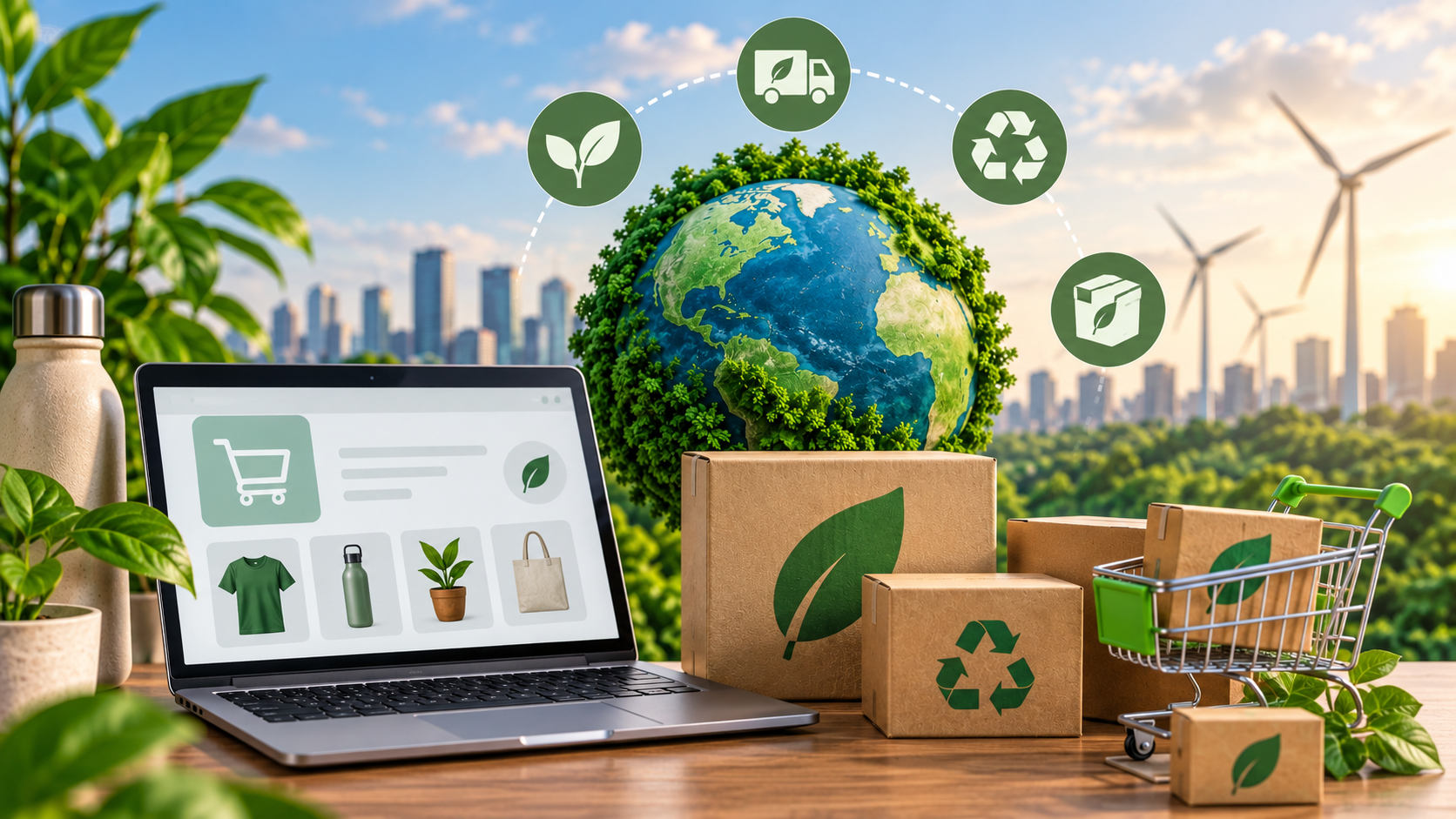
Online shopping has made buying almost anything frictionless — a few taps and a package arrives at your door. But that convenience carries a real environmental cost: packaging waste, carbon-heavy last-mile delivery, and energy-hungry warehouses. The good news is that the e-commerce industry is changing fast. A wave of genuinely meaningful innovations is reshaping how goods are packaged, shipped, and returned — and the environmental stakes couldn’t be higher.
This article breaks down the most important e-commerce innovations, their actual impact on sustainability, and what businesses and consumers can do to push things further.
The Environmental Footprint of E-Commerce
Before diving into solutions, it’s worth understanding the problem clearly.
E-commerce generates environmental pressure across several points in the supply chain:
- Packaging waste from single-use cardboard, plastic void fill, and excessive bubble wrap
- Last-mile delivery emissions from diesel vans making multiple stops per route
- Warehouse energy consumption from refrigeration, lighting, and automation systems
- Returns — which generate their own transport emissions and often result in landfill rather than resale
The sheer growth of online retail amplifies each of these. More orders means more boxes, more vans on the road, and more returns to process. Innovation that reduces per-order impact is therefore essential.
Sustainable Packaging: Beyond the Cardboard Box
Packaging is one of the most visible — and most discussed — sustainability challenges in e-commerce. The range of alternatives to traditional packaging has expanded significantly.
Biodegradable and Compostable Materials
Plant-based polymers, compostable mailers, and mushroom-based packaging (grown from agricultural waste and mycelium) are increasingly being used by brands looking to move away from petroleum-based plastics. These materials break down under the right conditions without leaving harmful residues, unlike conventional plastics that persist in the environment for centuries.
Right-Sized and Minimalist Packaging
One underappreciated innovation is simply making packaging fit the product better. Oversized boxes filled with air pillows are wasteful in two ways: they use more material and take up more space in delivery vehicles, meaning fewer packages per trip and more vehicle journeys.
Automated box-sizing systems, now used by major fulfillment centers, measure each product and cut corrugated cardboard to the exact dimensions needed. This reduces material use and shipping volume simultaneously.
Reusable Packaging Systems
Some brands — particularly in direct-to-consumer fashion and subscription boxes — are experimenting with durable, returnable packaging. Customers receive their order in a reusable bag or container and send it back for the next shipment. While this model works best for repeat-purchase categories, it represents a meaningful departure from the throwaway norm.
Green Logistics: Rethinking the Last Mile
Delivery is where much of e-commerce’s carbon footprint is concentrated. The “last mile” — getting a package from a local depot to a customer’s door — is notoriously inefficient and emissions-heavy.
Electric Delivery Vehicles
Major logistics operators and retailers are investing in electric delivery fleets. Amazon has committed to deploying electric delivery vans built by Rivian across its operations. DHL and UPS have similarly announced electrification targets for their urban delivery networks. Electric vehicles eliminate tailpipe emissions entirely when charged from renewable sources.
For smaller businesses, the shift is slower, but the trend is clear: urban delivery is moving toward zero-emission vehicles, aided by city-level regulations restricting diesel vans in town centers across Europe and parts of Asia.
Route Optimization with AI
AI-powered route optimization software reduces the kilometers driven per delivery by finding the most efficient sequence of stops. This isn’t just about speed — it directly cuts fuel use and emissions per package. Companies like Onfleet and Circuit specialize in this space, and the technology is now accessible to small logistics operations, not just large carriers.
Cargo Bikes and Micro-Fulfillment
In dense urban areas, cargo bikes and electric cycles are being used for last-mile delivery. They navigate city streets faster than vans during peak hours, produce zero emissions, and don’t require parking. Micro-fulfillment hubs placed closer to customers also reduce the distance each package travels.
AI and Automation in Warehousing
Behind every online order is a warehouse, and how that warehouse operates carries a significant environmental footprint.
Predictive Inventory Management
AI-powered demand forecasting helps retailers stock the right quantities in the right locations. When inventory is misallocated, products are shipped long distances or returned because they’re unavailable locally. Better prediction reduces unnecessary transportation and limits overstock that ends up as waste.
Energy-Efficient Automation
Automated warehouse systems — robotic picking, conveyor optimization, and smart lighting — reduce energy consumption per order. Systems developed by companies like Symbotic reduce the physical footprint of warehouses while increasing throughput, meaning less space and energy per unit shipped.
Renewable Energy in Fulfillment Centers
Several large retailers have committed to powering their warehouses through on-site solar installations or renewable energy procurement agreements. This reduces the operational carbon footprint of every order processed in those facilities.
Reverse Logistics: Making Returns Less Wasteful
Returns are a significant and often overlooked environmental problem. A returned item generates a second delivery journey and, if it can’t easily be resold, may be discarded.
Smarter Returns Processing
AI is being used to assess returned items and route them intelligently — back to resale stock, to a secondary market, or to recycling — rather than defaulting to landfill. Companies like Optoro work with retailers to maximize the value recovered from returns and reduce waste.
Reducing Returns at the Source
One of the most effective strategies is preventing unnecessary returns in the first place. Better product photography, accurate sizing tools, augmented reality “try before you buy” features, and detailed descriptions all help customers make better decisions the first time — reducing the return rate and all the emissions that come with it.
The Trade-Offs and Honest Challenges
It would be misleading to present e-commerce innovation as a straightforward environmental win. Several real tensions exist:
- Eco-friendly materials cost more — compostable packaging and electric vehicles require higher upfront investment, which creates barriers for smaller businesses on thin margins.
- Consumer demand for speed works against sustainability — same-day delivery typically means less-optimized routes and more individual trips.
- Biodegradable doesn’t always mean better — compostable packaging requires industrial composting conditions to break down properly. In a standard landfill, it may behave much like conventional plastic.
- Free returns are a structural challenge — they’re now a competitive expectation in many categories, but they carry a real carbon cost that is rarely visible to the consumer.
Honest sustainability requires addressing these trade-offs, not just celebrating innovation.
What Businesses and Consumers Can Do
For Businesses
- Audit packaging regularly and eliminate excess material
- Partner with carriers that offer verified carbon-neutral or low-emission shipping options
- Use AI-powered forecasting to reduce overstock and avoidable returns
- Be honest about sustainability — greenwashing erodes customer trust and, in some markets, is now subject to regulatory scrutiny
For Consumers
- Choose consolidated shipping rather than multiple individual deliveries where possible
- Opt for slower, grouped delivery when the product isn’t urgently needed
- Return items thoughtfully — and only when genuinely necessary
- Support brands that are transparent about their environmental practices, not just those with green logos
Conclusion
E-commerce innovations and environmental impact are deeply intertwined. From sustainable packaging and electric delivery fleets to AI-driven logistics and smarter reverse logistics, the tools to make online shopping significantly less damaging already exist. The challenge now is adoption at scale and a willingness — from both businesses and consumers — to accept that speed and low prices aren’t the only things that matter.
A more sustainable e-commerce industry isn’t a distant aspiration. The foundations are being built right now, and the businesses treating this as an operational priority — not just a marketing angle — will be far better positioned as regulation tightens and consumer expectations evolve.
Frequently Asked Questions
Q1: What is the biggest environmental impact of e-commerce? Last-mile delivery emissions and packaging waste are among the most significant contributors, alongside warehouse energy consumption and the carbon cost of processing returns.
Q2: How does AI help make e-commerce more sustainable? AI improves demand forecasting to reduce overstock, optimizes delivery routes to cut fuel use, and helps retailers assess and reroute returned items more efficiently — all of which reduce waste and emissions.
Q3: Is biodegradable packaging always better for the environment? Not automatically. Many compostable materials only break down properly in industrial composting facilities. Without the right infrastructure, they may still end up in landfill and decompose slowly.
Q4: What can consumers do to reduce their online shopping footprint? Choose consolidated delivery windows, avoid unnecessary returns, opt for slower shipping when urgency isn’t needed, and support retailers that are transparent about their sustainability practices.
Q5: Are electric delivery vehicles genuinely more sustainable? Yes, particularly when charged from renewable energy. They eliminate tailpipe emissions entirely. Their full lifecycle impact depends on how the electricity is generated and how batteries are ultimately recycled.
Leave a Reply