
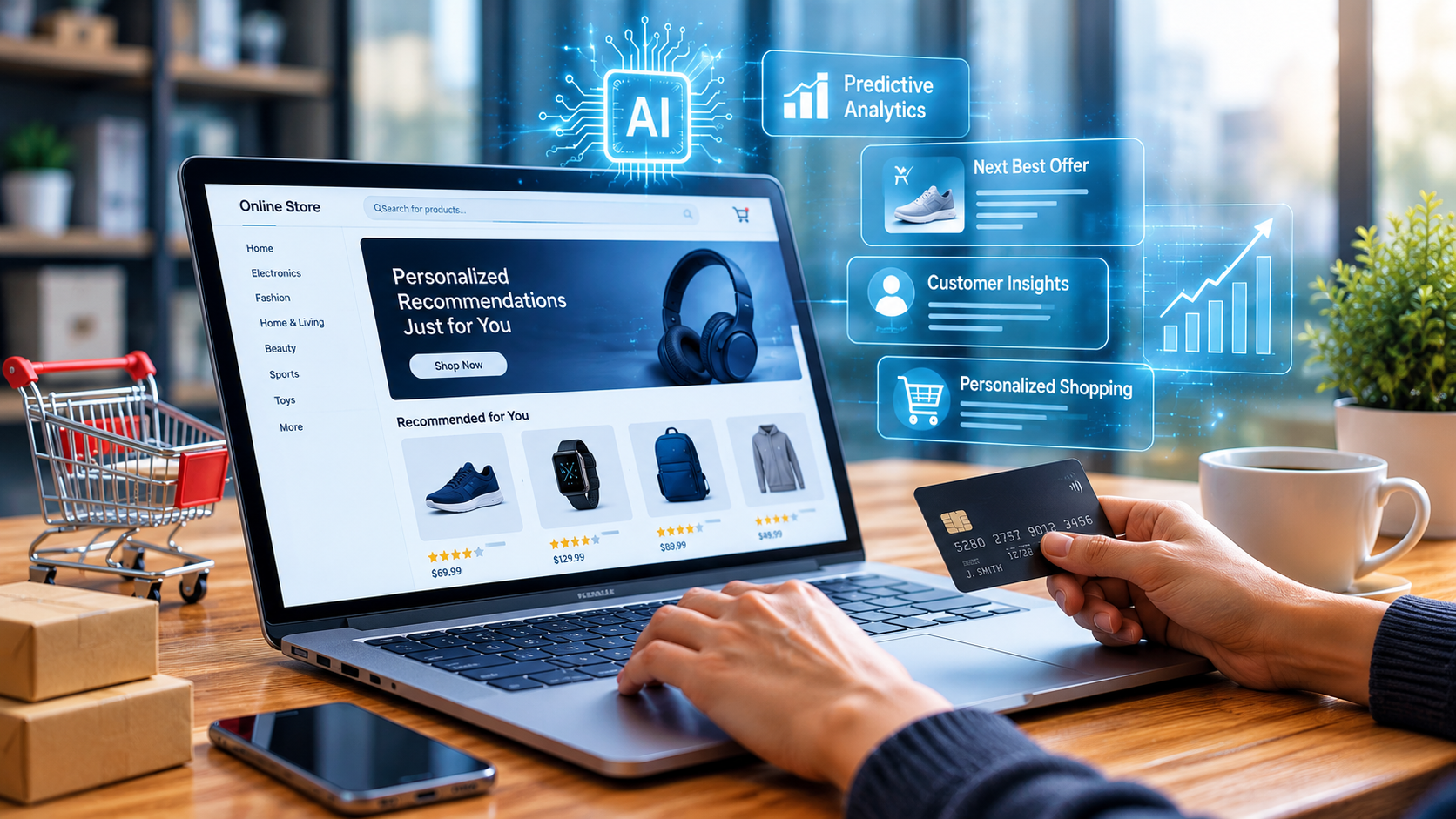
Online shopping has quietly become a conversation between machines and human intent. Every scroll, pause, and cart addition now feeds systems designed to anticipate what a customer wants before they’ve fully decided themselves. This shift — from reactive selling to predictive understanding — is one of the most consequential changes shaping e-commerce today, and AI sits at the center of it.
What Is Predictive Purchasing Behavior?
Predictive purchasing behavior refers to the practice of using data and technology to forecast what a customer is likely to buy, when they might buy it, and why. Instead of waiting for a purchase to happen and reacting afterward, businesses use historical and real-time signals to anticipate demand ahead of time.
This isn’t guesswork. It’s built on patterns — how people browse, what they compare, how long they hesitate, and what similar customers have done before them. AI has made this kind of forecasting far more accurate and scalable than traditional analytics ever allowed.
How AI and Machine Learning Predict Customer Purchase Decisions
Machine learning models don’t rely on a single data point to make predictions. They analyze combinations of signals simultaneously and adjust their conclusions as new data arrives. Some of the most influential inputs include:
- Browsing history – pages viewed, time spent, and repeat visits to specific products
- Purchase history – past orders, frequency, and seasonal buying patterns
- Search queries – the exact words customers use to look for products
- Clicks and cart activity – items added, removed, or left sitting in a cart
- Stated preferences – filters applied, wishlists, saved items, and account settings
- Customer interactions – responses to emails, chat support conversations, and reviews left
None of these signals alone tells the full story. But when AI models process them together, they can identify patterns a human analyst would likely miss — such as a customer who browses premium products but historically buys mid-range alternatives during sales periods.
Predictive Analytics and Recommendation Engines
Predictive analytics in e-commerce works by identifying correlations between past behavior and future actions. Recommendation engines are the most visible application of this technology. They power the “customers also bought” and “recommended for you” sections that have become standard on most shopping platforms.
These engines typically rely on a mix of approaches:
- Collaborative filtering, which recommends products based on the behavior of similar customers
- Content-based filtering, which suggests items similar to what a customer has already shown interest in
- Hybrid models, which combine both approaches for more balanced accuracy
The goal isn’t just to sell more — it’s to reduce the friction of choice, helping customers find relevant products faster.
Personalized Product Recommendations and Offers
Personalization has moved well beyond showing similar products. AI now helps businesses tailor pricing, promotions, and messaging to individual shopping patterns. A customer who frequently buys during flash sales might receive a discount notification, while a loyal repeat buyer might instead be offered early access to new arrivals.
This kind of targeted relevance benefits both sides — customers see fewer irrelevant offers, and businesses spend marketing budgets more efficiently.
AI-Powered Customer Segmentation
Traditional segmentation grouped customers by broad categories like age or location. AI-powered segmentation goes deeper, grouping customers by behavioral patterns such as purchase frequency, price sensitivity, product category loyalty, and engagement level.
These dynamic segments update continuously as new behavior is recorded, allowing businesses to shift strategies in near real time rather than relying on quarterly reports.
Demand Forecasting and Inventory Planning
Predictive purchasing behavior isn’t only about individual customers — it also shapes inventory decisions at scale. AI models analyze historical sales trends, seasonal fluctuations, and emerging demand signals to help businesses forecast which products are likely to sell and in what quantities.
This has practical operational benefits:
- Reducing overstock and understock situations
- Improving supply chain efficiency
- Supporting smarter warehousing and logistics decisions
Accurate demand forecasting helps businesses avoid the costly extremes of excess inventory or missed sales opportunities.
Predictive Marketing and Customer Retention
AI also helps businesses anticipate customer churn before it happens. By analyzing declining engagement, longer gaps between purchases, or reduced email interaction, predictive models can flag customers who are at risk of leaving.
This allows retention efforts — such as personalized offers or re-engagement campaigns — to be deployed proactively rather than after a customer has already stopped buying.
Real-Time Personalization
One of the more significant advances is the shift from static personalization to real-time responsiveness. Instead of relying solely on past behavior, modern systems can adjust recommendations, homepage layouts, and offers based on what a customer is doing during their current session.
This means two visitors browsing the same website at the same moment may see meaningfully different experiences, shaped by their live behavior rather than outdated assumptions.
How Generative AI May Influence Future Shopping Experiences
Generative AI introduces a new layer to predictive purchasing. Rather than only predicting what a customer might buy, generative tools can help create the experience around that prediction — from AI-generated product descriptions tailored to individual interests to conversational shopping assistants that help customers refine their choices through dialogue.
While still evolving, this direction suggests a future where shopping feels less like searching a catalog and more like having a knowledgeable assistant guide the decision-making process.
Benefits for E-Commerce Businesses and Customers
For businesses, predictive purchasing behavior translates into more efficient marketing, better inventory management, and stronger customer loyalty. For customers, it often means a smoother shopping experience — less time searching, more relevant recommendations, and offers that actually match their interests.
When implemented thoughtfully, predictive AI creates a more efficient marketplace for everyone involved.
Privacy, Data Security, and Ethical Concerns
None of these benefits come without responsibility. Predictive systems depend on large volumes of personal data, which raises legitimate concerns around:
- Data privacy – ensuring customer information is collected and stored responsibly
- Transparency – clearly communicating how data is used to shape recommendations
- Consent – giving customers control over what data is tracked and how
- Security – protecting sensitive purchase and behavioral data from breaches
Businesses that prioritize ethical data practices are more likely to build long-term customer trust — a factor that ultimately affects the accuracy of predictive models themselves, since engaged, trusting customers generate cleaner behavioral data.
Limitations and Challenges of Predicting Customer Behavior
Predictive AI is powerful, but it isn’t infallible. Several challenges remain:
- Human unpredictability – not all purchase decisions follow logical patterns
- Data quality issues – incomplete or biased data can distort predictions
- Over-personalization risk – excessive targeting can feel invasive rather than helpful
- Changing behavior – economic shifts or personal circumstances can quickly make historical patterns irrelevant
Recognizing these limitations helps businesses use predictive tools as guidance rather than absolute certainty.
Future Trends and What Businesses Should Prepare For
Looking ahead, predictive purchasing behavior is likely to become more contextual, more conversational, and more privacy-conscious. Businesses should prepare by:
- Investing in clean, well-structured customer data
- Building transparent data practices customers can trust
- Balancing automation with human oversight
- Staying adaptable as generative AI tools continue to evolve
Companies that treat predictive AI as an ongoing capability — rather than a one-time implementation — will be better positioned as customer expectations continue to shift.
Final Thoughts
AI in predictive purchasing behavior is reshaping how businesses understand and serve their customers. From recommendation engines to demand forecasting, the technology offers real efficiency gains — but its long-term success depends on responsible data use and a continued focus on genuine customer value, not just algorithmic accuracy.
FAQs
1. What is predictive purchasing behavior?
It’s the use of data and AI to forecast what customers are likely to buy based on past and real-time behavior patterns.
2. How does AI predict what customers will buy?
AI analyzes signals like browsing history, search queries, cart activity, and past purchases to identify patterns and forecast likely future actions.
3. What is the role of recommendation engines in predictive purchasing?
Recommendation engines use collaborative and content-based filtering to suggest relevant products, improving personalization and shopping efficiency.
4. Is predictive purchasing behavior always accurate?
No. While useful, predictions can be affected by incomplete data, unpredictable human decisions, and sudden shifts in customer circumstances.
5. What privacy concerns come with AI-driven purchase prediction?
Key concerns include data security, transparency in data usage, and ensuring customers have control and consent over how their information is tracked.
Leave a Reply