Every independent filmmaker, commercial videographer, and digital creator eventually hits a ceiling where basic consumer gear no longer cuts it. Client expectations rise, broadcast standards tighten, and delivery deadlines shrink. In that environment, separating internet marketing hype from dependable production technology becomes vital for running a sustainable creative business.
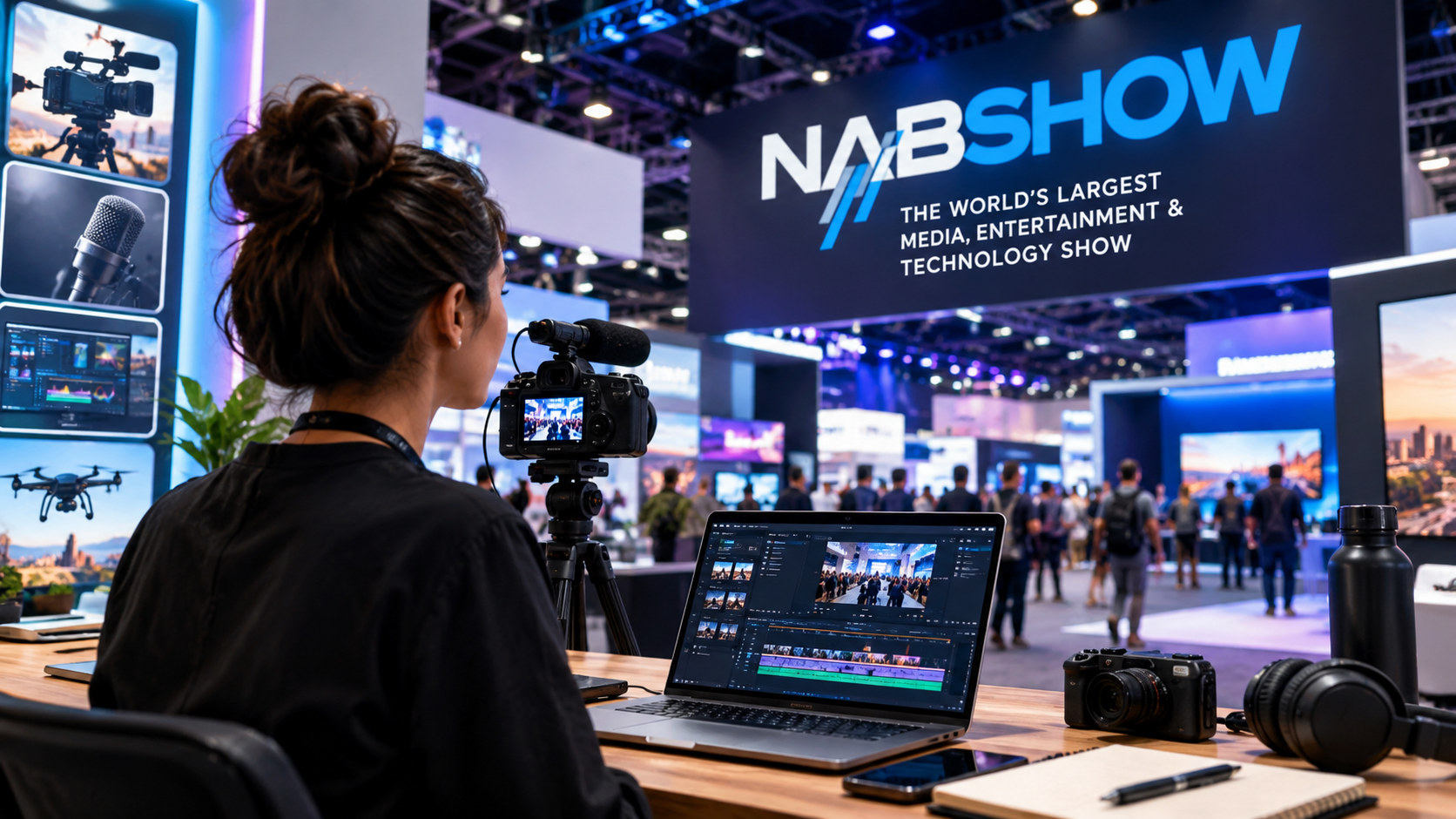
For decades, the National Association of Broadcasters (NAB) Show has served as the premier proving ground for media technology. While historically focused on television networks and Hollywood studios, the event has fundamentally evolved. Today, the NAB Show in Las Vegas is an essential destination for digital creators, streamers, commercial directors, and podcasters aiming to elevate their production value.
Navigating this massive event requires understanding how modern production tools translate into real workflows. This guide traces a creator’s journey from discovering gear on the show floor to implementing industry-grade tools, software, and AI in real projects.
Stage 1: Hands-On Discovery Across Cameras, Optics, and Audio
The primary draw of the NAB Show floor is handling professional hardware before making substantial capital investments. Unlike evaluating gear through compressed internet videos, the exhibit halls allow creators to inspect build quality, color science, thermal limits, and menu ergonomics firsthand.
Cinema Sensors and Modular Camera Systems
Major camera manufacturers—including Sony, Canon, Blackmagic Design, RED Digital Cinema, and Panasonic—anchor the central halls. The technological focus centers on compact modularity. Creators can examine full-frame cinema cameras offering internal 12-bit RAW recording, multi-base ISO architectures, and electronic variable ND filters built into lightweight bodies.
Testing specialized cinema glass is equally valuable. From accessible anamorphic lenses that provide distinctive widescreen flares to compact cine-zooms engineered for solo operators, having direct access to optical engineers helps creators decide whether to purchase dedicated glass or rely on rental houses for specific shoots.
Studio Lighting and Wireless Audio Infrastructure
Production quality is often decided by audio fidelity and light control rather than camera resolution alone. The lighting pavilions showcase high-output LED fixtures with exceptional color accuracy (CRI 98+) and silent passive cooling systems, which are essential for dialogue-heavy studio sets.
Meanwhile, the audio tech zone features advancements in dual-channel digital wireless systems from brands like Røde, Sennheiser, Shure, and DJI. With 32-bit float onboard recording becoming standard, field recordists and solo creators can capture clean, unclipped audio in unpredictable live environments without constant gain adjustment.
Stage 2: Upgrading the Live Streaming and Podcasting Pipeline
Live broadcasting is no longer confined to million-dollar satellite trucks. The technology enabling multi-camera broadcasts has shrunk into portable flypacks and software systems tailored for modern creators.
IP Video, NDI, and Cloud Switching
A major theme across NAB broadcasting halls is the migration to IP video protocols, particularly NDI (Network Device Interface) and SRT. Instead of running bulky SDI or fragile HDMI cables, creators can route multiple 4K video feeds, tally signals, and camera control over standard gigabit Ethernet networks.
For multi-host podcast studios and corporate event streamers, hardware switchers like Blackmagic ATEM units integrate smoothly with cloud video routing. Streamers distributing to multiple destinations simultaneously rely on multi-destination pipelines such as Restream to manage bandwidth and audience chat across YouTube, Twitch, and custom RTMP servers without overloading local internet connections.
Stage 3: The Post-Production Overhaul with AI and NLE Workflows
While physical hardware draws large crowds, post-production innovation is where creators recapture billable hours. The dedicated Post | Production World (P|PW) conference and software exhibition floors highlight practical solutions designed to eliminate tedious editing bottlenecks.
Generative AI Inside Non-Linear Editors
Artificial intelligence at NAB has matured beyond novelty filters into indispensable editorial infrastructure. Leading editing platforms, including Adobe Premiere Pro, DaVinci Resolve, and Final Cut Pro, showcase native AI toolsets embedded directly into timelines.
Demonstrated workflows emphasize practical automation: intelligent text-based editing, voice isolation algorithms that clean noisy room tone, automated scene-cut detection, and generative tools that reframe horizontal video for vertical platforms. Complementing native NLE tools, smart audio-editing suites like Descript AI demonstrate how transcription-driven workflows accelerate rough-cut assembly.
Cloud Asset Management and Turnkey Stock Resources
Fast-turnaround commercial video requires instant access to professional assets. Production teams explore comprehensive media libraries like Artlist.io to license curated cinematic footage, stem-separated soundtracks, and motion templates under universal commercial terms. Combining centralized asset libraries with cloud collaboration tools like Frame.io enables distributed teams to receive client notes and deliver final masters rapidly.
Stage 4: Translating Show Floor Buzz into Measurable Studio ROI
Attending a trade show of this scale carries a real risk: Gear Acquisition Syndrome (GAS). Walking through halls filled with 8K cinema lenses, virtual LED production volumes, and robotic camera jibs can tempt creators into unnecessary financial commitments.
Successful attendees approach the show with a strict evaluation framework before purchasing new gear:
- Bottleneck Resolution: Does this tool solve a proven constraint in your current pipeline, such as cutting render times or eliminating multi-operator dependencies?
- Client Monetization: Can you charge higher commercial rates or offer new deliverables (such as multi-cam podcasting or HDR delivery) as a direct result?
- Operational Reliability: Does the hardware or software offer stable firmware, reliable customer support, and backward compatibility with your existing editing ecosystem?
Beyond gear purchases, the networking value often yields the highest tangible return. Creators interact directly with brand product managers, opening doors for creator gear sponsorships, beta testing opportunities, and technical partnerships rarely accessible through email.
Who Should Attend and Practical Remote Alternatives
The NAB Show takes place annually in mid-April at the Las Vegas Convention Center in Nevada. However, traveling involves significant investments in registration fees, lodging, and airfare.
Who Gains the Highest Value from In-Person Attendance
In-person attendance is most beneficial for:
- Commercial production company owners looking to scale camera, lighting, and audio inventory.
- Independent documentary filmmakers needing to test specialized optics and sound capture gear.
- Studio podcasters and live broadcasters transitioning to multi-camera IP and cloud switching setups.
- Freelance video editors and colorists seeking advanced training at Post | Production World.
How to Follow the Show Remotely
If budget or schedule constraints prevent traveling, creators can leverage several remote alternatives:
- Official Digital Passes: NAB offers virtual session passes and streaming keynotes covering critical industry shifts.
- Creator Floor Recaps: Tech creators on YouTube provide detailed booth walkthroughs and camera comparisons within hours of announcement keynotes.
- Manufacturer Livestreams: Companies like Blackmagic Design, Sony, and Adobe host live product demonstrations and feature breakdowns online.
- Local Post-NAB Events: Regional user groups and rental houses regularly host demo days, allowing local creators to test newly released hardware without traveling.
Frequently Asked Questions (FAQs)
1. What is the NAB Show, and who organizes it?
The NAB Show is the world’s largest annual media, entertainment, and technology trade show. It is organized by the National Association of Broadcasters and brings together industry professionals across film, television, audio, streaming, and creator technology.
2. Is the NAB Show worth attending for solo content creators?
Yes, provided you have a specific production goal. Modern NAB shows feature dedicated creator pavilions, mobile filmmaking tools, podcasting gear, and AI editing workshops tailored for solo and lean teams.
3. Where and when is NAB Show 2026 held?
NAB Show 2026 takes place April 18–22, 2026, at the Las Vegas Convention Center in Las Vegas, Nevada, with exhibition halls open April 19–22.
4. How much do tickets to the NAB Show cost?
Basic exhibit floor passes frequently start with free or low-cost guest pass codes provided by exhibitors, while comprehensive passes that include conferences like Post | Production World (P|PW) range from several hundred to over a thousand dollars.
5. Can I test camera equipment directly on the exhibition floor?
Yes. Exhibitor booths feature active demonstration sets with professional lighting, models, and monitoring stations where attendees can mount their own memory cards to test camera sensors, lenses, and color profiles firsthand.
Leave a Reply