
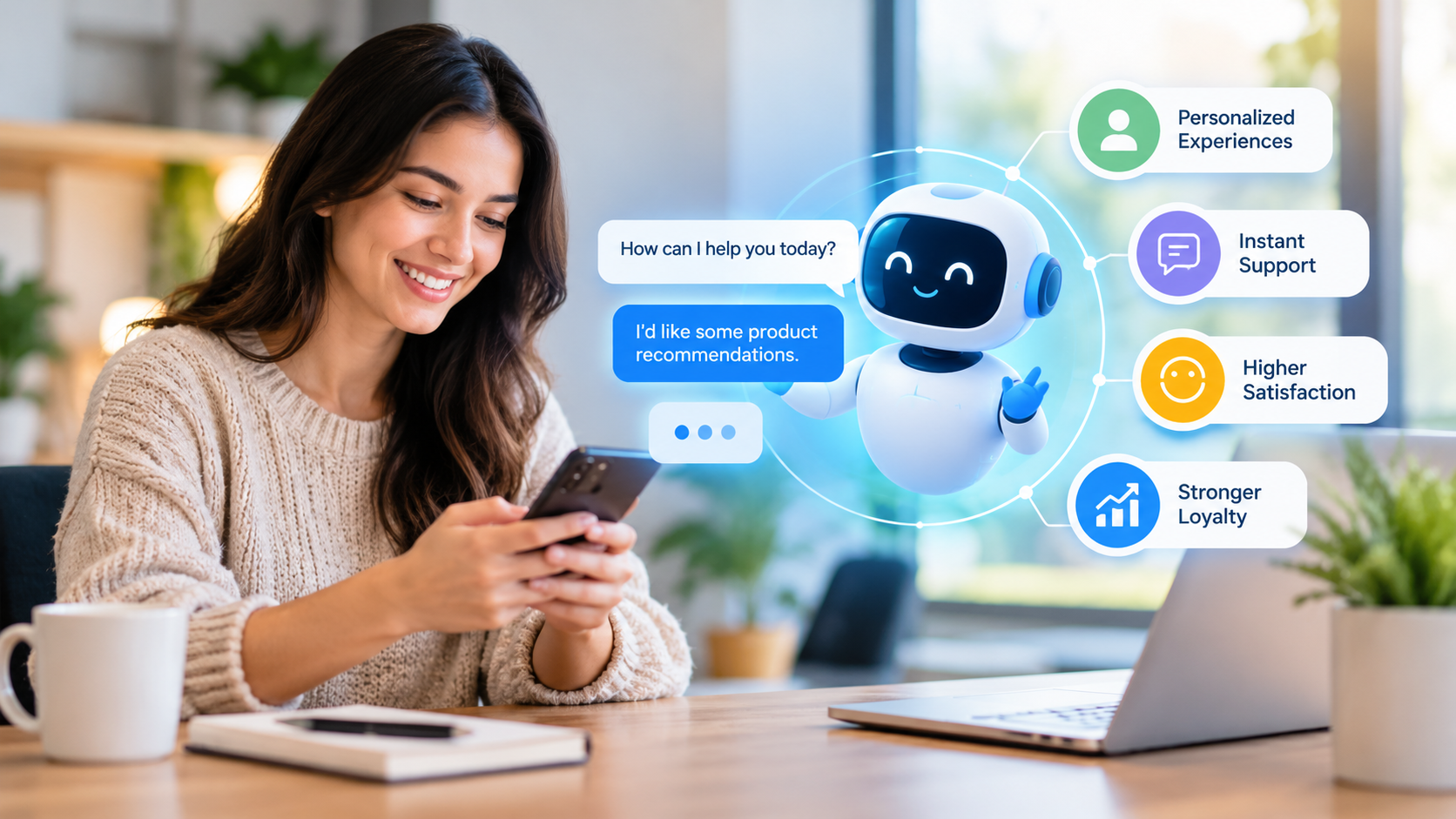
For years, the phrase “customer service automation” elicited collective groans from consumers and support leaders alike. Early chatbots were little more than brittle decision trees that forced frustrated users down rigid conversational cul-de-sacs, failing at the slightest deviation in phrasing. Today, that paradigm is collapsing. Advances in generative artificial intelligence, retrieval-augmented generation (RAG), and agentic workflows have transformed automated customer engagement from a rudimentary deflection tactic into an intelligent, outcome-driven operational layer.
According to the Zendesk Customer Experience Trends Report, over 70% of customer service leaders are actively integrating generative AI into their workflows, and nearly three-quarters of consumers express frustration when forced to repeat their issue across fragmented channels. However, deploying AI effectively requires far more than turning on a generic conversational widget. Organizations must navigate nuanced pricing models, data grounding hygiene, conversational guardrails, and seamless human escalation paths.
Whether you manage a fast-scaling SaaS startup or an established enterprise, this guide breaks down the architecture of modern AI customer engagement, compares the leading software platforms, outlines a battle-tested four-phase rollout strategy, and details how to measure genuine return on investment without alienating your customer base.
The Evolution of AI in Customer Engagement: From Deflection to Resolution
To understand why modern AI feels fundamentally different, one must examine how the underlying technology has evolved over the past decade:
- First-Generation Chatbots (Rule-Based): Powered by static
if/thendecision logic and strict regex keyword matching. If a user typed “I want to change my credit card on file” instead of “update payment details”, the bot routinely broke down. The primary metric was deflection—shunting inquiries away from agents, regardless of whether the customer’s problem was actually solved. - Second-Generation Conversational AI (Intent-Based NLU): Relied on Natural Language Understanding (NLU) models like Dialogflow or early Watson. These engines classified user intent and mapped it to predefined template answers. While better at handling variations in phrasing, they were expensive to train, brittle to maintain, and completely unable to synthesize unscripted answers from documentation.
- Third-Generation Agentic AI (GenAI + RAG + API Actions): Modern systems leverage Large Language Models grounded by Retrieval-Augmented Generation (RAG). Instead of reciting hardcoded scripts, the AI indexes your real-time knowledge base, documentation, and help articles, synthesizing contextual, natural responses. More importantly, using tool calling and secure APIs, agentic models can perform real transactional work—such as issuing a return label, modifying a subscription tier, or scheduling an onboarding call.
As covered in our guide on the anatomy of generative AI, the magic of modern models lies in their ability to reason over contextual data. In a customer service setting, this transforms the bot from a frustrating gatekeeper into an autonomous digital tier-1 specialist.
Core High-Impact Use Cases Across the Customer Lifecycle
AI customer engagement is not confined to a single chat widget on your homepage. When integrated holistically, intelligent automation touches every phase of the customer relationship.
1. Autonomous Tier-1 Resolution
Routine inquiries make up 40% to 60% of inbound volume for most software and e-commerce companies: order tracking, password resets, plan upgrade inquiries, and basic troubleshooting. By grounding an AI agent on your verified knowledge base, these tickets can be resolved instantly 24/7 without human intervention. Crucially, the goal here is resolution, not merely deflection—the inquiry is fully satisfied on the first contact.
2. Agent Copilots and Real-Time Assistance
AI should empower human agents, not replace them. Rather than toggling between disjointed chatbot tabs—a friction we explored in our analysis of why users are shifting to integrated AI workspaces—modern customer support platforms embed copilots directly into the agent inbox to deliver real-time assistance:
- Instant Ticket Summarization: Summarizing multi-page email threads or chat transcripts into a 3-bullet brief before an agent steps in.
- Tone Adjustment & Policy Verification: Drafting professional, empathetic responses that automatically adhere to company refund policies and brand guidelines.
- Automated Knowledge Retrieval: Surfacing internal technical documentation relevant to the customer’s specific hardware or software version.

3. Predictive Sentiment and Churn Prevention
By monitoring product telemetry, usage dips, and recurring support complaints, predictive machine learning models can identify accounts at high risk of churning weeks before a cancellation request is filed. Support and customer success teams can trigger proactive check-ins or automated diagnostic tutorials, turning potential detractors into loyal accounts.
4. Omnichannel Context Continuity
Nothing damages customer trust faster than forcing someone to re-explain their technical problem when transitioning from a web chat to an email or phone call. Modern AI solutions maintain unified memory across channels—web, WhatsApp, Slack, email, and voice. As discussed in our review of Nextiva and modern business phone systems, conversational voice AI now integrates directly with digital CRM records to provide context-rich phone routing without frustrating keypad IVR mazes.
Leading AI Customer Engagement Platforms: Feature & Pricing Analysis
Choosing the right customer engagement platform requires evaluating not only AI capabilities, but also software integration depth and pricing structures. Over the past two years, leading providers have diverged significantly in their commercial models, moving from traditional per-seat licensing toward outcome-based and consumption-based pricing.
| Platform | AI Engine Architecture | Pricing Model | Best Suited For | Key Limitation |
|---|---|---|---|---|
| Intercom (Fin AI) | GPT-4o RAG pipeline with public/private content indexing and custom workflows. | $0.99 per successful resolution + base seat subscription ($39–$139/seat/mo). | SaaS products, tech startups, high-velocity digital brands. | Outcome billing can escalate quickly on high-volume consumer sites. |
| Zendesk AI | Proprietary CX models trained on customer service tickets + OpenAI enterprise integration. | Advanced AI add-on ($50/agent/mo) + committed Automated Resolutions ($1.50–$2.00/res). | Mid-market to large enterprises with complex ticketing workflows. | Steep learning curve and premium pricing tiers for advanced routing. |
| HubSpot Service Hub | Breeze Customer Agent & Breeze Copilot native to HubSpot Smart CRM. | Included in Service Hub tiers; AI usage consumes Breeze credits based on volume. | B2B companies prioritizing tight alignment between marketing, sales, and support. | Less granular technical troubleshooting features than dedicated helpdesks. |
| Freshdesk (Freddy AI) | Freddy Self-Service and Freddy Copilot powered by multimodal LLMs. | $29/agent/mo Copilot add-on; Freddy bot sessions sold at $100 per 1,000 sessions. | Cost-conscious mid-sized businesses and fast-growing support teams. | Complex multi-system API orchestration requires custom middleware. |
| Salesforce Service Cloud | Agentforce (formerly Einstein Service Agent) with deep Data Cloud integration. | Consumption-based ($2.00 per conversation) on top of Enterprise licenses. | Global enterprises requiring deep ERP, billing, and back-office integration. | Substantial implementation costs and long configuration deployment timelines. |
Understanding the “Outcome-Based” Pricing Model
One of the most consequential shifts in software economics is the rise of outcome-based billing, pioneered by Intercom’s Fin AI ($0.99 per resolution) and followed by Zendesk’s Automated Resolution packages ($1.50 to $2.00 per resolution). Under this model, you do not pay when the bot simply replies; you only pay when the customer indicates their issue was resolved (or when they exit the conversation without escalating or reopening the ticket within a defined timeframe).
While this aligns software costs directly with business value, companies must monitor edge cases. If a bot gives an ambiguous answer that leaves a customer mildly dissatisfied but too frustrated to continue chatting, the platform may classify that interaction as a “successful resolution,” triggering a charge. Clear reporting dashboards and customer satisfaction (CSAT) confirmation questions are essential to verify genuine resolution accuracy.
A Battle-Tested 4-Phase Implementation Blueprint
Successful AI deployment is an exercise in data hygiene and risk management. Rushing an untrained model into public production risks hallucinated policies, customer outrage, and brand embarrassment. Follow this structured four-phase roadmap to roll out AI safely.
Phase 1: Knowledge Hygiene and Documentation Grounding
An AI model is only as reliable as the documentation grounding it. Before touching any bot configuration:
- Audit Existing Knowledge Base Articles: Delete obsolete articles, update outdated pricing charts, and resolve conflicting policies. If you have two articles stating different return windows (e.g., 14 days vs. 30 days), the AI will inevitably produce contradictory answers.
- Structure Content for Retrieval: LLM retrieval engines parse clear, modular text far better than dense, multi-page PDFs. Break complex procedural manuals into clear question-and-answer pairs or step-by-step checklists.
- Isolate Sensitive Internal Notes: Clearly distinguish public-facing help documentation from internal agent guidance to prevent confidential internal workflows from leaking to external users.
Phase 2: Defining Guardrails, Safety Fallbacks, and Tool Scopes
Never permit an AI agent to improvise answers outside its domain. Implement strict operational guardrails:
- Strict Grounding Directives: Configure system prompts instructing the model: “If the answer is not explicitly stated in the verified reference documents, politely state that you do not have that information and offer to connect the user with a human specialist.”
- Immediate Human Escape Hatches: Provide an unmistakable button or keyword command (such as typing “agent” or “representative”) that instantly routes the customer to human queue without frustrating circular loops.
- Read-Only vs. Transactional Action Limits: In early deployment, configure API actions as read-only (e.g., fetching shipping status or checking account tier). Restrict high-risk write actions—such as processing refunds or deleting accounts—to human verification until the AI’s accuracy is mathematically proven.
Phase 3: Controlled Pilot with Traffic Throttling
Rather than switching on AI support for 100% of incoming visitors, initiate a low-risk pilot:
- Route only 10% to 20% of traffic through the AI agent during business hours when human supervisors are available to intervene.
- Restrict the bot initially to specific, low-risk topic categories (such as password resets, shipping updates, and basic feature explanations).
- Review all unhandled inquiries and escalated conversations daily to identify gaps in your knowledge documentation.
Phase 4: Continuous Prompt Tuning and Intent Analytics
AI implementation is not a one-time project; it is an ongoing operational loop. Review your analytics weekly to identify emerging query trends. When a software update releases new features or creates unexpected bugs, update your grounding documentation immediately. As explored in our analysis of enterprise emerging technology strategies, organizations that treat AI management as an active editorial responsibility achieve significantly higher customer retention rates than those who treat it as passive software.
Real-World Advantages and Strategic Limitations
A balanced evaluation of customer-facing AI requires recognizing both its transformative capabilities and its technical constraints.
Key Advantages
- Instant Sub-Second Response Times: Zero queue wait times for routine questions dramatically lowers customer abandonment and boosts initial satisfaction.
- Scalable 24/7 Global Coverage: Support international customers across multiple time zones and languages without multiplying overnight human staffing expenses.
- Reduced Agent Burnout: Eliminating hundreds of repetitive password reset and tracking inquiries frees human staff to focus on high-value, complex, and emotionally sensitive client conversations.
- Actionable Customer Insights: Automated classification of ticket themes uncovers product UX friction, software bugs, and missing documentation faster than manual audits.
Strategic Limitations and Risks
- Risk of Confident Hallucinations: If documentation is ambiguous, an LLM may fabricate policies or invent product features. Rigorous RAG parameters and continuous testing are mandatory.
- Context Degradation in Long Conversations: During lengthy troubleshooting interactions, models can lose conversational context, resulting in circular questions. Hard limits on interaction turns should trigger automatic human escalation.
- Data Governance and Compliance: Sharing customer personal identifiable information (PII) with third-party LLMs introduces compliance obligations under GDPR, CCPA, and SOC 2. Ensure your vendor signs Data Processing Agreements (DPAs) and guarantees that customer data is never used to train public foundational models.
Key Metrics to Measure True Customer Engagement ROI
To demonstrate commercial return, support organizations must evaluate metrics that reflect genuine problem resolution rather than surface-level activity:
- True First Contact Resolution (FCR): The percentage of customer queries resolved in a single session without requiring subsequent follow-up or ticket reopening within 72 hours.
- Deflection Rate vs. Resolution Rate: Deflection measures tickets avoided; resolution measures issues actually solved. High deflection paired with declining CSAT is a warning sign that customers are simply abandoning broken bot chats in frustration.
- Customer Satisfaction Score (CSAT): Segregate CSAT scores for bot-handled conversations versus human-handled tickets. A well-tuned AI should match or come within 3% of human agent satisfaction for tier-1 inquiries.
- Average Handle Time (AHT) for Human Staff: When AI copilots assist human agents with summarization and drafting, measure the reduction in time required to resolve complex escalated cases.
- Net Cost Per Resolved Ticket: Calculate total software licensing, API token costs, and outcome fees divided by resolved tickets, compared to fully loaded human agent hourly costs.
Frequently Asked Questions
What is the difference between a rule-based chatbot and generative AI engagement?
Rule-based chatbots operate strictly on predetermined decision trees and keyword triggers. If a user’s question deviates from programmed scripts, the bot fails. Generative AI engagement uses Large Language Models and RAG to understand natural language variations, interpret context, search verified knowledge bases, and generate accurate, tailored answers dynamically.
How can businesses prevent AI from hallucinating incorrect policies?
Businesses prevent hallucinations by implementing Retrieval-Augmented Generation (RAG) with strict negative constraints. The system prompt must explicitly instruct the model never to guess or synthesize answers beyond verified documentation. If the information is not present in the indexed knowledge base, the system should acknowledge the gap and immediately offer human escalation.
Are outcome-based pricing models cheaper than per-agent software licenses?
Outcome-based models (such as paying $0.99 or $1.50 per successful resolution) can be significantly more economical for businesses with high seasonal fluctuations or well-documented routine queries. However, for companies with ambiguous inquiries or high volume where customers abandon chats without clarifying issues, resolution charges can add up quickly. A blended model with strict resolution criteria is recommended.
Does using customer data with AI platforms compromise privacy or violate GDPR?
Reputable enterprise AI platforms (including Intercom, Zendesk, Salesforce, and HubSpot) offer enterprise data protections, SOC 2 Type II certification, and GDPR-compliant Data Processing Agreements. Crucially, enterprise tiers guarantee that customer conversations and proprietary business data are kept private and never fed into public training datasets.
Can small businesses implement AI customer engagement without an engineering team?
Yes. Turnkey SaaS platforms now allow non-technical teams to sync their public website, Zendesk Help Center, or Notion documentation with a few clicks. The platform handles document vectorization, chunking, and LLM prompt management automatically, requiring zero custom coding to launch a baseline conversational agent.
Conclusion: The Path to Smarter, Human-Centric Customer Engagement
Artificial intelligence is not a silver bullet that eliminates the need for human empathy, strategic thinking, or skilled customer support professionals. Rather, it is a powerful force multiplier that removes repetitive friction from customer journeys and liberates human teams to build genuine relationships.
Organizations that succeed with AI customer engagement do not focus purely on cutting costs; they focus on delivering instant, accurate, and effortless experiences for their users. By investing in thorough knowledge hygiene, enforcing strict operational guardrails, choosing the right platform for their volume and workflow, and closely monitoring true resolution metrics, modern businesses can turn customer support from an expensive operational overhead into an enduring competitive advantage.
References & Official Sources Consulted:
1. Zendesk CX Trends Global Research Report: Data on enterprise AI adoption, omnichannel expectations, and human-centric ROI.
2. Intercom Fin AI Documentation & Architecture Guidelines: Published outcome-based pricing models ($0.99/resolution) and RAG configuration standards.
3. HubSpot & Salesforce Enterprise Automation Documentation: Analysis of Agentforce, Breeze AI copilots, and CRM data integration standards.
Leave a Reply