
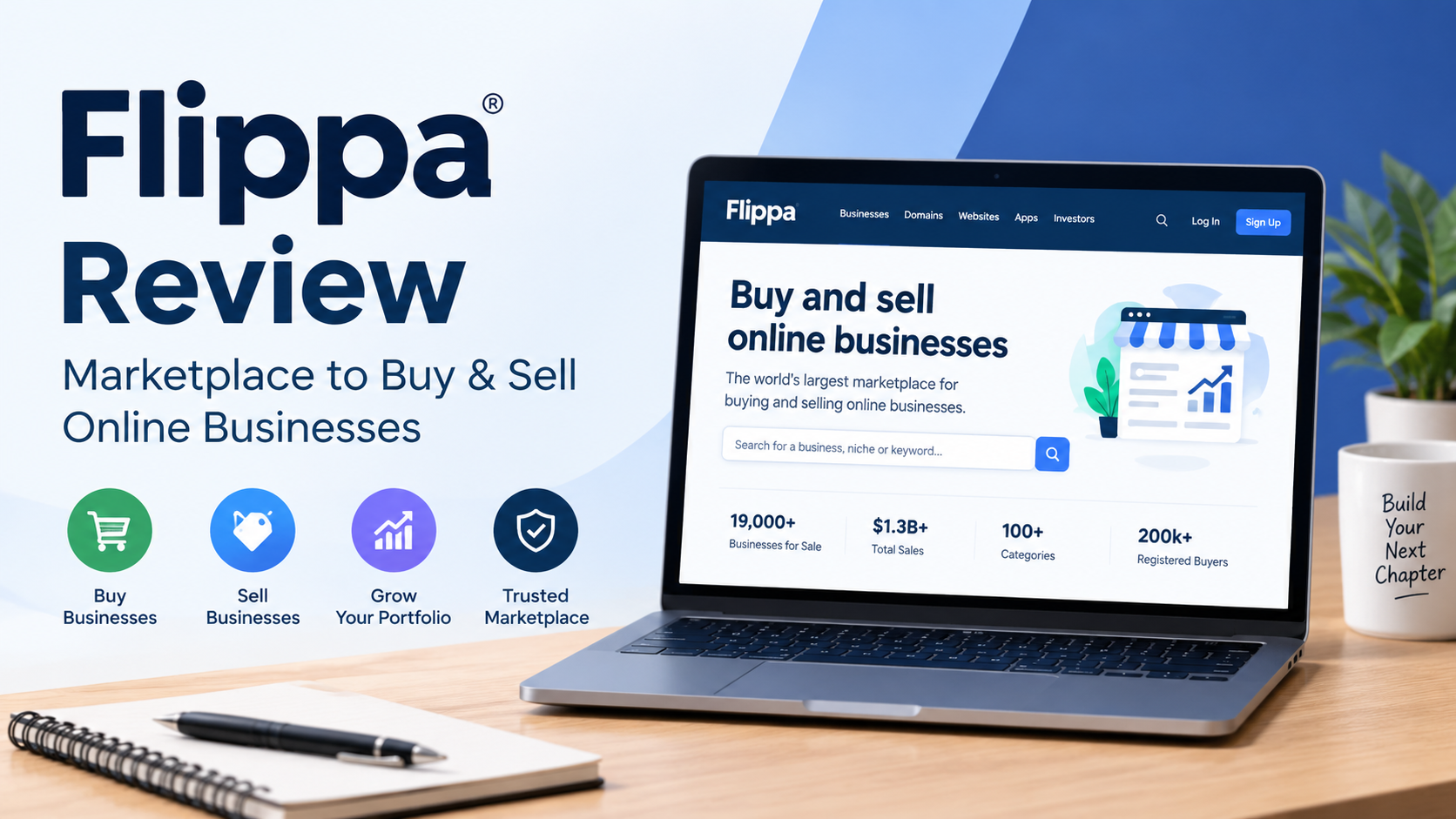
The concept of digital real estate has moved from a niche interest to a mainstream investment strategy. Just as physical property can be bought, renovated, rented, or sold, digital assets — content sites, e-commerce stores, SaaS applications, and even domain names — are actively traded every day. The challenge has always been finding a centralized, liquid market where buyers and sellers can meet transparently. Flippa is the oldest and largest marketplace built specifically to solve this problem.
Unlike traditional business brokers who act as highly involved intermediaries, Flippa operates primarily as a peer-to-peer marketplace. It provides the infrastructure, the audience, and the transaction mechanisms, but leaves much of the negotiation and verification to the users. This model creates both significant opportunities and notable risks.
This review explores how the Flippa marketplace functions in practice, the reality of its fee structure, what the transaction process looks like, and the essential steps buyers and sellers must take to protect themselves.
Inside the Flippa Ecosystem: What Actually Gets Traded
Flippa is not limited to a single type of digital asset. Its catalog is diverse, ranging from brand-new starter sites to established businesses generating millions in annual revenue. The assets generally fall into a few primary categories:
Content and Affiliate Websites
Blogs, review sites, and informational hubs monetized through display advertising (like AdSense or Mediavine) and affiliate networks (like Amazon Associates) make up a significant portion of the marketplace. These are often attractive to buyers looking for passive income or established traffic they can optimize.
E-commerce and Dropshipping
Stores built on Shopify, WooCommerce, or Amazon FBA are frequently traded. Buyers typically look at supply chain stability, profit margins, and customer acquisition costs when evaluating these businesses.
SaaS and Apps
Software as a Service (SaaS) businesses and mobile applications (iOS and Android) often command higher valuation multiples due to their recurring revenue models. These listings attract buyers with technical backgrounds or investment groups looking for scalable tech assets.
Digital Real Estate: Domains
Flippa also hosts a massive inventory of parked and premium domain names. While this is less about business operations and more about speculative real estate, it remains a highly active segment of the platform.
The Seller’s Journey: Listing and Exiting
For business owners, Flippa offers access to the largest pool of registered buyers in the industry — reportedly over three million. But successfully selling a business requires more than just publishing a listing.
Valuation and Listing Options
The process begins with valuation. Flippa offers an automated valuation tool based on historical sales data, though sellers ultimately set their own asking prices. You can choose to list your asset as an auction (which drives urgency and competitive bidding) or as a classified listing with an asking price (better for higher-value, established businesses where negotiations take time).
The Cost of Selling
Selling on Flippa involves two main costs: listing fees and success fees.
Listing Fees: To list an asset, sellers pay a fixed upfront fee. Depending on the package chosen — which dictates the level of visibility, marketing, and support the listing receives — these fees typically range from $29 for starter sites up to $499 or more for premium business packages with dedicated support.
Success Fees: When a business sells, Flippa takes a percentage of the final sale price. The fee structure is tiered; smaller transactions carry a higher percentage (up to 10%), while multi-million dollar deals see the success fee drop significantly (sometimes down to 3% or 4%). It is crucial for sellers to calculate these fees into their expected net return.
Handling Negotiations and Broker Options
While the platform is primarily DIY, high-value sellers have alternative routes. Sellers with businesses generating substantial annual profit can engage Flippa’s premium broker service. For an increased fee structure, dedicated account managers handle the compilation of the prospectus, actively pitch the business to vetted high-net-worth buyers and institutional investors, and mediate the negotiations. For sellers who lack experience in M&A (Mergers and Acquisitions) or simply do not have the time to filter out low-ball offers, this broker-assisted model provides a bridge between a standard marketplace listing and a boutique brokerage experience.

The Buyer’s Journey: Filtering the Noise
For buyers, Flippa is a goldmine of opportunity, but it requires a disciplined approach. Because the barrier to entry for sellers is relatively low, the marketplace contains a mix of high-quality businesses, neglected projects, and, inevitably, low-effort starter sites designed solely to be flipped.
Search and Discovery
Flippa provides extensive filtering tools. Buyers can sort by monetization method, monthly profit, traffic volume, asset age, and industry niche. The platform also offers curated lists, such as “Editor’s Choice” or businesses with verified revenue, which help cut through the sheer volume of listings.
The Importance of the Watch Feature
Experienced buyers rarely jump on the first listing they see. They use the platform’s Watch feature to monitor how auctions develop, observe how sellers answer questions in the public comments, and track whether a business hits its reserve price. Observing the market is a crucial precursor to active bidding.
The Critical Phase: Due Diligence
If there is one defining characteristic of using Flippa, it is the absolute necessity of buyer due diligence. Flippa is a marketplace, not a traditional broker. While they have introduced increasingly robust verification systems, the ultimate responsibility for verifying claims lies with the buyer.
Traffic Verification
Flippa integrates with Google Analytics, allowing sellers to display verified traffic data directly on their listings. Buyers should scrutinize this data carefully. A sudden, unexplained spike in traffic just before listing is a red flag, as is a heavy reliance on a single traffic source (like a single viral Pinterest post) that may not be sustainable.
Financial Verification
Similarly, Flippa connects with platforms like Stripe and Quickbooks to verify revenue. However, buyers must request read-only access or live screen-shares to verify that the claimed revenue matches the actual deposits. It is essential to verify the expenses as well — a business making $10,000 a month in revenue is worthless if it costs $11,000 in ad spend to generate it.
Seller History and Reputation
Flippa displays seller profiles, including their transaction history and feedback ratings. Buying from a seller with a track record of successful, well-reviewed transactions carries significantly less risk than buying from a newly created account with no history.
Post-Sale Support Agreements
Another crucial element of due diligence is negotiating post-sale support. Buying a business is rarely as simple as handing over passwords. Complex operations require a transition period where the seller helps the buyer understand the daily workflows, introduces them to key suppliers or freelance staff, and explains the nuances of the customer acquisition strategy. A standard agreement typically includes 30 days of email support and a few scheduled video calls, ensuring the buyer is not left stranded on day one.
Securing the Transaction: Escrow and Transfers
Once a price is agreed upon or an auction is won, the transaction moves into the payment and transfer phase. This is where Flippa provides vital infrastructure to protect both parties.
Flippa integrates closely with Escrow.com (and offers its own Flippa Escrow service for certain transactions). The buyer deposits the funds into the secure escrow account. The seller is then notified to transfer the assets — domains, hosting accounts, social media profiles, and codebases.
The funds are only released to the seller after the buyer has received the assets and confirmed they match the listing description during a predefined inspection period. This mechanism effectively eliminates the risk of a buyer paying and receiving nothing, or a seller transferring a business and not getting paid.
Who Succeeds on This Platform?
Flippa is a powerful tool, but it is not suited for everyone. Success on the platform generally requires matching a specific profile.
The Ideal Buyer
The most successful buyers on Flippa are analytical and patient. They understand digital marketing, SEO, and basic web infrastructure. They are willing to put in hours of due diligence, reading profit and loss statements, and analyzing backlink profiles. They look for businesses where they can add immediate value — perhaps buying a site with great traffic but poor monetization, and implementing a better ad setup to double the revenue instantly.
The Ideal Seller
Successful sellers are transparent and organized. They keep immaculate financial records, prepare detailed prospectuses, and are highly responsive to buyer questions. Sellers who treat the exit process professionally, providing verifiable data and clear growth roadmaps, consistently achieve higher valuation multiples than those who post sparse, unverified listings.
The Realistic Verdict
Flippa remains the undisputed heavyweight of the digital asset marketplace. Its sheer scale means that if you want to buy or sell an online business, you cannot ignore it. The platform has matured significantly, adding crucial integrations for traffic and revenue verification that make the ecosystem much safer than it was a decade ago.
However, it is vital to approach the platform with clear eyes. The peer-to-peer nature means the burden of proof rests on the users. Sellers must invest time in creating compelling, verified listings and be prepared to pay the associated fees. Buyers must act as their own analysts, treating every claim with skepticism until verified through hard data.
For those willing to do the work, Flippa offers unparalleled access to digital entrepreneurship. It provides the liquidity that makes digital real estate a viable asset class, turning side projects into scalable exits and offering investors a direct route into profitable online enterprises.
Frequently Asked Questions (FAQs)
1. Is Flippa safe for buying an online business?
Flippa provides secure infrastructure, including Escrow services and verified data integrations (like Google Analytics and Stripe), which make transactions secure. However, it is a marketplace, not an advisory service. The platform is safe provided the buyer conducts rigorous due diligence and verifies all financial and traffic claims before releasing funds from Escrow.
2. How much does it cost to sell on Flippa?
Sellers face two main costs. First is a fixed listing fee, which typically ranges from $29 for starter assets up to $499 for premium, high-visibility packages. Second is a success fee taken only when the business sells. This fee is tiered based on the sale price, generally ranging from 10% for smaller sales down to 3-5% for multi-million dollar transactions.
3. Can I sell a brand-new website with no traffic or revenue?
Yes. Flippa allows the sale of “Starter Sites” or newly developed apps that have not yet generated traffic or revenue. These listings have lower listing fees but generally sell for much lower prices, as buyers are paying only for the design, domain, and potential rather than an established cash flow.
4. What happens if a seller misrepresents the business?
If you use an Escrow service (which is highly recommended and integrated into Flippa), you have an inspection period after the assets are transferred. If the business fundamentally differs from the listing during this period, you can dispute the transaction and halt the release of funds while the issue is resolved.
5. Do I need to be a developer to buy a business on Flippa?
No, but technical knowledge is highly advantageous. If you are buying a content site or e-commerce store, basic knowledge of WordPress or Shopify is usually sufficient. For SaaS or complex apps, if you are not a developer, you will need to hire one to manage the codebase and handle the technical migration during the transfer process.
Leave a Reply